
Carefully. Pittosporum doesn't shoot from old wood as reliably as griselinia, so we usually stage reductions over a couple of seasons. We'll walk you through what's realistic for your hedge.
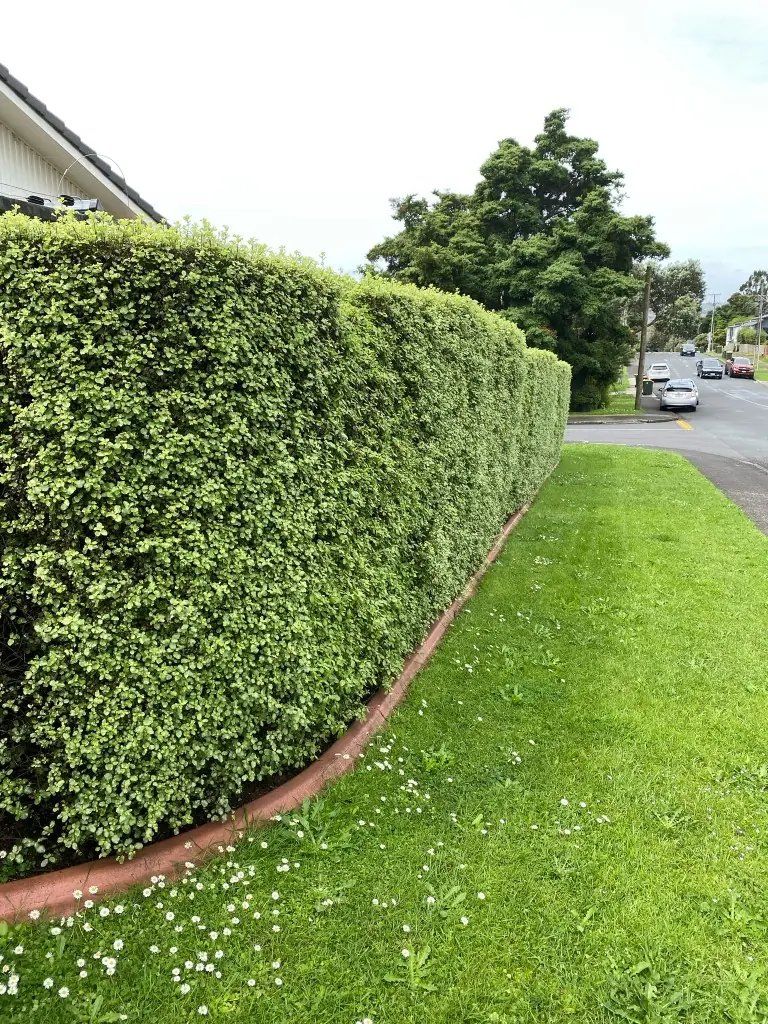
Pittosporum· Pittosporum tenuifolium
Pittosporum hedge trimming in Auckland.
Tidy, upright, fine-leafed — pittosporum is the go-to when you want a clean architectural hedge with a soft texture.
About Pittosporum
Pittosporum tenuifolium (kohuhu) is a New Zealand native used everywhere across Auckland for formal screening hedges. The small wavy-edged leaves give it a fine texture that's hard to match, and the upright growth habit means it forms a neat hedge with minimal shaping. 'Silver Sheen', 'James Stirling' and 'Stephens Island' are the most common varieties we see.
Why it's popular in Auckland
It grows fast, takes shape easily, and looks intentional rather than wild. Pittosporum is also relatively narrow — perfect for tight Auckland sections where you need privacy but can't sacrifice much width. The fine leaves drop cleanly and don't make a mess.
At a glance
- Growth rate
- Fast (50–80cm per year)
- Max height
- 3–5m as a hedge
- Best aspect
- Full sun (some part shade OK)
- Coastal tolerance
- Good
- Trim frequency
- 2–3 times per year
- Lifespan
- 20–30 years
Best time to trim
Trim in late spring after the main growth flush, and again in late summer. A light shape-up in autumn helps it hold its form through winter. Avoid hard reductions in winter — pittosporum doesn't recover as quickly from old wood as griselinia does.
Care & trimming tips
- Trim little and often to keep that clean architectural look
- Don't cut back too far into old bare wood — pittosporum doesn't always re-shoot
- Feed in spring with a slow-release fertiliser to keep the foliage glossy
- Watch for psyllid damage on the soft new growth — usually only an issue on stressed plants
- If a section dies out, replant rather than waiting — gaps don't fill in well
Common issues we see
The biggest issue we see is pittosporum that's been let go for years, then trimmed hard back into bare wood — large patches stay brown and don't recover. Where possible we'll trim back to live growth only and stage a reduction over two or three seasons. We also see a lot of psyllid damage and the occasional wind-snapped trunk on tall thin hedges.
FAQ
Pittosporum hedge questions
Fast — 50–80cm per year in good conditions. That's why it needs 2–3 trims a year to stay sharp.
Yes — it grows tall and dense quickly, and the upright habit means it doesn't take up much width. One of our most-recommended privacy species.
Silver Sheen has slightly larger silvery-green leaves and a more vigorous habit; James Stirling is finer-leafed and slower. Both make great hedges — happy to advise based on photos.
Free quote on your Pittosporum hedge.
Text a few photos and your address — we'll come back with an honest price, usually the same day.
Related services for Pittosporum hedges
- Auckland hedge trimming
Level tops, clean faces, crisp edges — tall hedges welcome.
- Hedge reduction & reshaping
Bring oversized hedges back to a manageable, tidy height.
- Garden tidy-ups
Weeding, pruning and a full property tidy in one visit.
- Green waste removal
Trimmings loaded and taken away — no piles left behind.
- Commercial hedge trimming
Body corps, schools and retail — scheduled hedge contracts.
- Ongoing garden maintenance
Regular visits to keep hedges and beds in shape year-round.
Areas we commonly trim Pittosporum hedges
Suburbs where we regularly trim this species across Auckland.